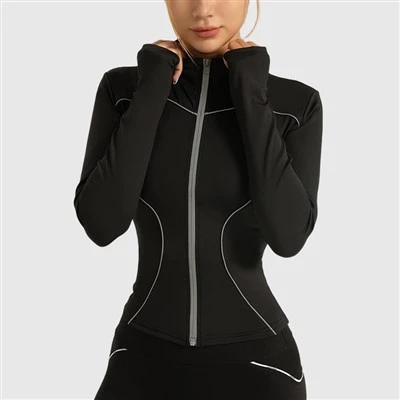
What Makes a Running Long Sleeve Suitable for Cold Weather?
A cold-weather running top should not be chosen by thickness alone. Its fabric, fit and coverage need to match whether it will be worn next to the skin, under another layer or on its own. The goal is to provide suitable warmth without limiting movement or creating unnecessary heat build-up during a run.
Define the Layering Role First
Base Layer
A base layer sits close to the body. It should move easily through the shoulders, elbows and torso without creating bulky folds under another garment.
Mid Layer
A mid layer sits between the first layer and an outer jacket. It needs enough room underneath while remaining compact enough to layer comfortably.
Standalone Top
A standalone long sleeve has to manage its own coverage, fit and airflow because there may be no additional garment over it.
Four Fabric Factors Matter
| Factor | What It Affects | What to Review |
|---|---|---|
| Fabric Weight | Body, drape and overall garment bulk. | Whether the weight suits the intended layer position. |
| Inner Surface | Handfeel against the body and the character of the garment. | Whether a smooth, brushed or other inner construction suits the intended use. |
| Stretch | Movement through the upper body and arms. | Whether the fabric moves comfortably with the selected fit. |
| Airflow | How easily excess heat can leave the garment during activity. | Whether the top remains comfortable as running intensity changes. |
Neckline, Cuffs and Hem Control Coverage
Neckline
A crew neck keeps the design simple, while a raised collar can provide more neck coverage. The shape should remain comfortable during repeated movement.
Cuffs
Cuffs should remain in position during arm swing without creating excessive pressure around the wrist.
Hem and Back Length
The body length should provide suitable coverage without bunching when the runner bends, rotates or wears another layer.
Fit Should Match the Way the Top Is Worn
Fitted
A closer silhouette reduces excess fabric and can work well next to the skin or beneath another layer. The pattern still needs enough room for natural running movement.
Regular Fit
A regular fit allows more room underneath and can suit a standalone top. Excess volume should still be controlled so the garment does not move unnecessarily while running.
Cold-Weather Comfort Changes as Running Intensity Changes
A long sleeve that feels warm before a run may feel very different once the runner is moving. The garment should therefore be reviewed during active use, when body heat and moisture increase, as well as when the pace slows again.
Higher Effort
Check whether the garment becomes overly warm, restricts movement or needs more ventilation around the neckline.
Lower Effort
Check whether the same fabric and coverage still feel suitable when movement slows and less body heat is being produced.
Optional Design Details
Half-Zip
A half-zip adds adjustable neck coverage and gives the wearer another way to regulate airflow.
Thumbholes
Thumbholes extend the sleeve over part of the hand and can help keep the cuff in place beneath another layer.
Reflective Details
Reflective elements can be included where visibility features are part of the product specification. Placement should remain compatible with seams and branding.
Details to Confirm Before Sampling
- Base, mid or standalone layer role
- Target fabric weight
- Inner surface direction
- Required stretch and recovery
- Fitted or regular silhouette
- Neckline or collar design
- Cuff construction
- Front and back body length
- Half-zip if required
- Thumbholes if required
- Reflective details if required
- Colors, size range and branding
Check the Finished Top While Running
| Check | What to Review |
|---|---|
| Arm Swing | Shoulder, underarm and elbow movement without pulling the body upward. |
| Torso Rotation | Whether the shirt moves naturally without twisting or restricting the body. |
| Layered Wear | Whether the top sits comfortably with the intended layer above or below it. |
| Changing Pace | Comfort as heat, airflow and activity level change during the run. |
Warm Running Long Sleeve FAQ
How thick should a cold-weather running top be?
There is no single suitable thickness for every use. Fabric weight should match the layering role, expected conditions and running intensity.
Is a fitted long sleeve always warmer?
No. Fit changes how the garment sits on the body, but fabric structure, coverage and the other layers being worn also affect the overall result.
Is a half-zip necessary for a warm running shirt?
No. It is useful when adjustable neck coverage and airflow are wanted, while a crew neck keeps the garment simpler.
Does a cold-weather running top need a brushed inner surface?
Not always. A brushed inner surface is one possible direction. The choice should match the garment's layer role, fabric weight and intended feel.
Develop the Long Sleeve Around Its Intended Use
Share your running top reference, layering role, fabric direction, fit, neckline, cuff and coverage requirements, size range and branding details.